 English
 Dansk
Dansk Deutsch
Give your visitors more. Learn more from their experience.
AITourPilot helps museums offer a more personal visit while gaining new insight into what engages their audiences.
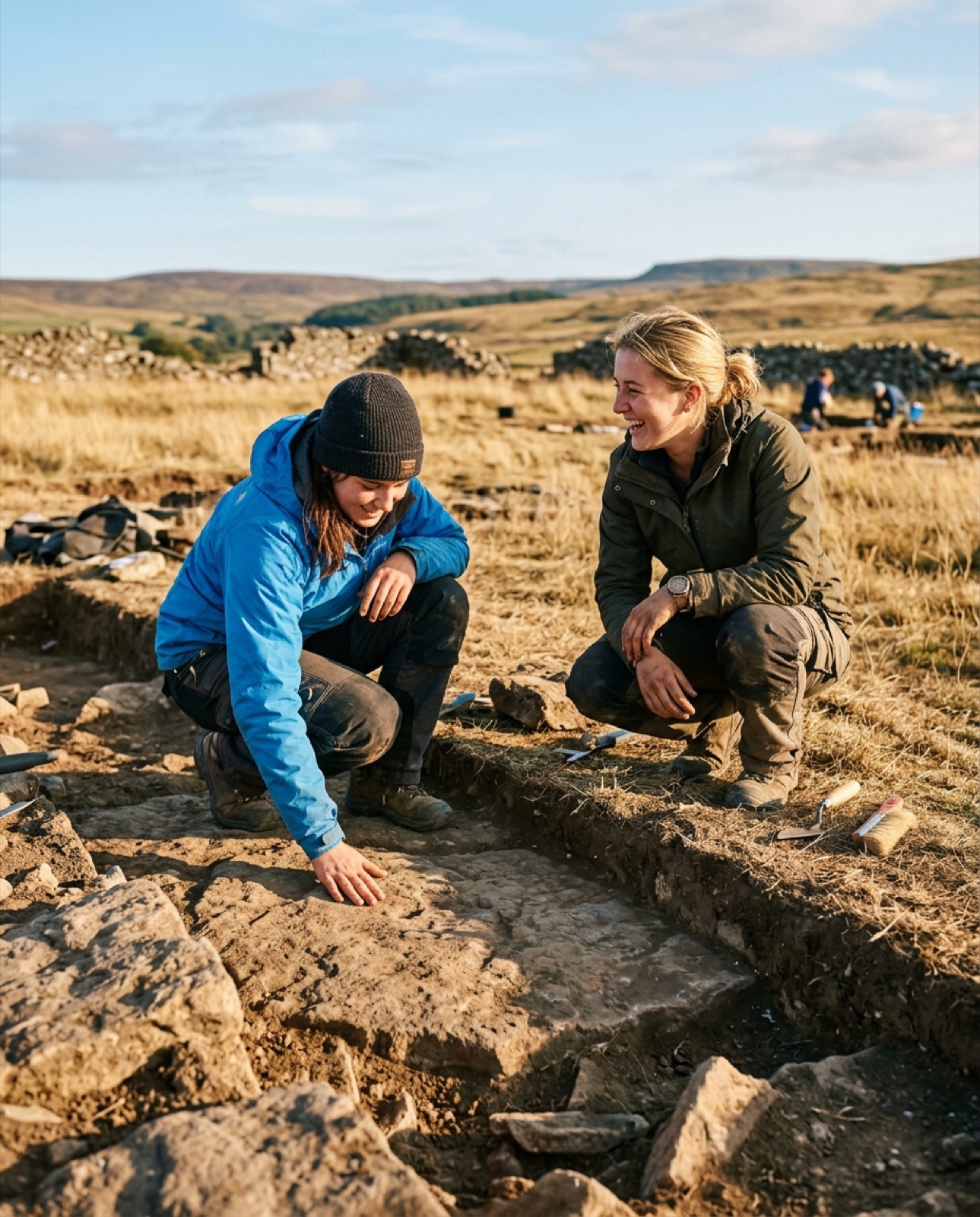
Not every visitor meets a guide. Everyone can meet the story.
Many visitors walk around on their own. They see something that raises a question, and the question stays there.
That is where Henry is. He gives the visitor the museum’s own stories in that very moment, in their own language and at their own depth – without changing the role your guides and curators have today.
Museums gave us their own word for it: a forest of signs – because so many are needed, for different audiences and different languages. Henry is one guide who is a different guide for every visitor. The exhibition does not change; everyone meets it on their own terms.
- A child, a family, a first-time visitor, a specialist
- Six languages live today, up to seventy possible
- Their own phone and earphones – nothing to buy or hand out
Every question a visitor asks is a piece of evidence.
Henry is the only guide that answers and reports. Every visitor who talks to him says what they wanted to know, in their own words, and it accumulates day after day into a picture of what your collection actually makes people curious about.
A survey reaches the fraction of visitors who stop to fill it in, and it asks them on the way out – when the question they had in front of the object has already gone. A question put to Henry arrives unprompted, in the room, at the moment it occurred to someone.
What visitors are curious about
The questions themselves, as they were asked.
Which works generate questions
And which ones nobody stops in front of.
Which stories hold people
Where a conversation keeps going, and where it ends.
What your interpretation did not cover
What they wanted that was not there.
Conversations are kept as text, never as audio. What a museum reads is anonymous – the questions, not the people who asked them. No cameras, no scanning, and no named visitor followed through a building.
Everyone in the building arrives at this with a different question.
If you lead the museum
Evidence a board will accept: what your own visitors asked, in your own rooms, written up by us. And if it is funded, the application in the fund’s own format, in your name.
Results · Starting a pilotIf you run digital or engagement
What visitors actually asked, where they lingered, which works held them. Questions, not clicks.
Museum insightsIf you are a curator
Several ways into the same collection without writing several guides. You design the journey and he walks it – and he says so when the record is uncertain.
You stay in controlIf you run the school programme
A class hears him together over one speaker, the teacher leads, and the children’s questions come back to you.
Schools & learningIf you look after data protection
Text, never audio recordings. And a document rather than a paragraph.
Trust & securityIf you weigh the cost
A pilot costs less than you might think. Besides, your project may be eligible for funding: we write the application, you apply and own it.
Starting a pilot
It matters because of what it lets the visitor do.
Henry is a conversational AI guide. He generates the answer rather than selecting a recording, which is why he can answer a question nobody wrote a track for.
- Your content
- →
- AITourPilot
- →
- Henry
- →
- A conversation in your rooms
- →
- What your visitors asked
For the colleagues who need the detail: who stays in control, starting a pilot, schools & learning and trust & security.
A new language does not cost a new print run.
Nothing is produced, handed out, collected in or replaced: no leaflet to reprint when a room changes, no device to charge and clean, no stock to run out of on a busy Sunday. A correction reaches every visitor the same day, and a new language costs no print run and no recording session.
Test Henry for free with your own material.
From one catalogue entry to a complete exhibition. We bring it to Henry.
Hear Henry speak about your content.
Test it internally with a secure link.
Test it with real visitors.
We help you run the days and write the report.
No strings attached – just a preview for your museum. Send it however it comes: an export, a document, whatever is at hand. What you send is treated as confidential, under your NDA or ours. Your content is removed after the test. No AI system is trained on your data.